
In an era where data is currency and automation reigns, fintech companies are collecting, analyzing, and acting on user behavior at unprecedented scale. For some, this creates a dangerous temptation: to use data for control rather than service.
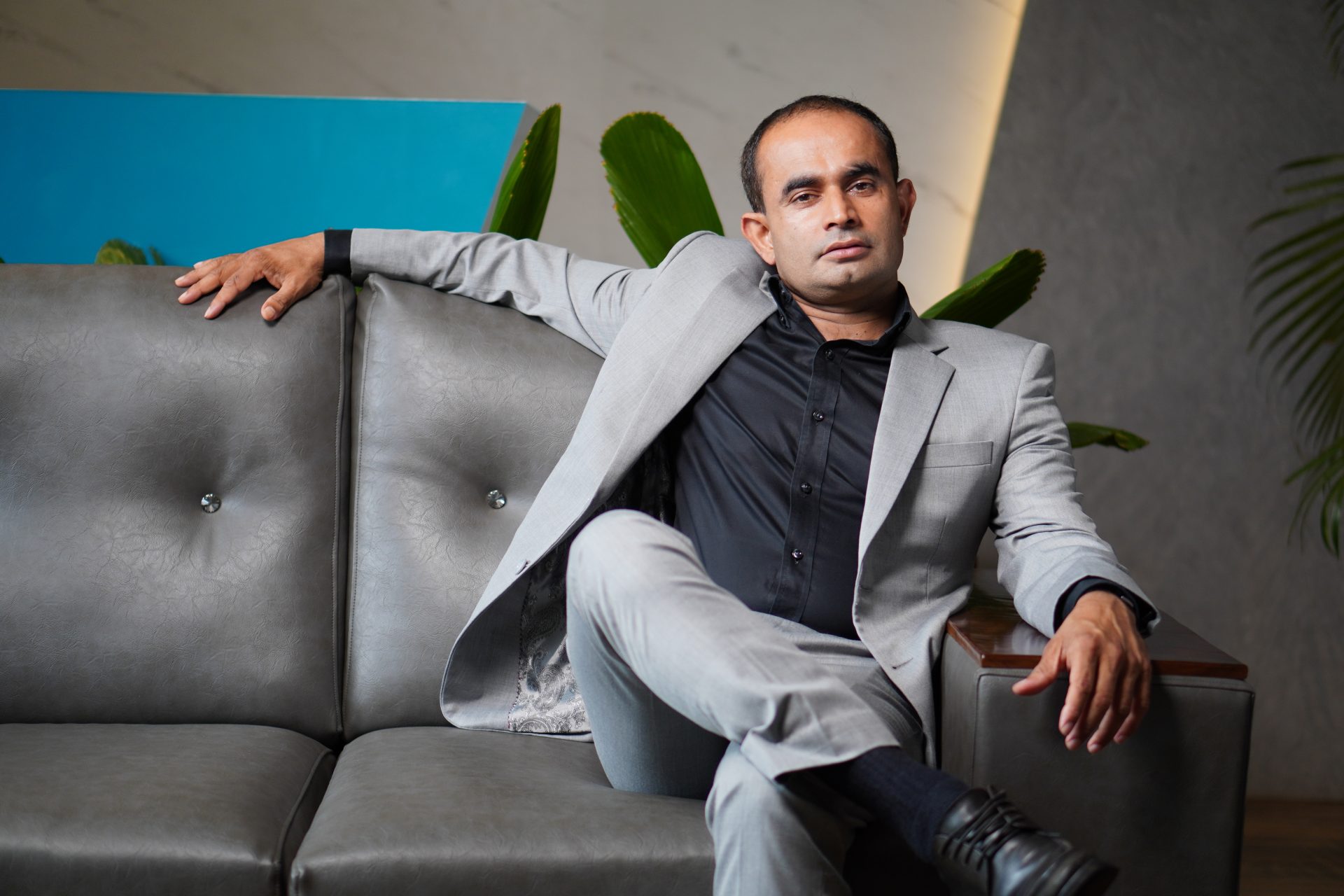
But for Sabeer Nelli, founder and CEO of Zil Money, data is never just a resource—it’s a responsibility.
At Zil Money, the use of data and intelligent automation follows a different path—one grounded in ethics, transparency, and respect for user autonomy. Because Sabeer understands something many tech leaders overlook: just because you can track it, doesn’t mean you should exploit it.
A Philosophy of Permission and Purpose
Sabeer’s views on data were shaped not in Silicon Valley boardrooms but through years of operating real-world businesses. At Tyler Petroleum, he dealt with sensitive information every day: employee records, vendor contracts, bank details. And he saw how easily that trust could be compromised when systems were opaque or manipulative.
When he launched Zil Money, he chose a different standard. From day one, the platform was designed to collect only what’s necessary, explain why it’s needed, and offer users full control over their information.
This isn’t about compliance checkboxes—it’s about philosophy.
“We don’t just follow regulations. We follow respect.” — Sabeer Nelli
Building Transparent Automation
Zil Money uses intelligent automation to simplify complex workflows—like check mailing, bank reconciliation, and payment routing. But what sets the platform apart is how clearly it communicates what’s happening behind the scenes.
For example:
- Users are shown exactly what data is used to trigger an action.
- Predictive suggestions (like payment reminders or categorization) come with clear explanations—not silent overrides.
- Audit trails are built-in, not bolted on, so businesses always have visibility and control.
Sabeer’s rule for automation is simple: It should support decision-making, not replace it.
This builds confidence, especially among Zil Money’s core user base—small business owners who value control and clarity above all else.
Privacy by Design, Not as an Add-On
Many platforms retroactively add privacy settings once their user base grows. Sabeer made privacy foundational to Zil Money’s architecture:
- Granular permission controls allow users to manage access for every role and team member.
- End-to-end encryption protects sensitive financial data during transmission and storage.
- User data segmentation ensures that client information is never shared across accounts or services without explicit consent.
Zil Money also complies with the world’s most rigorous data regulations:
- GDPR (EU)
- CCPA (California)
- HIPAA (for medical-related payments)
- ISO 27001 (global information security standard)
But again, compliance is not the ceiling. It’s the floor. Sabeer sees these as the minimum obligation, not the ultimate goal.
No to Surveillance, Yes to Service
One of the boldest parts of Zil Money’s data strategy is what it chooses not to do.
Unlike some platforms that log every click, mine every transaction, and build behavior profiles for ad targeting or upselling, Zil Money draws a hard line:
- No intrusive session tracking
- No user data sold or shared with third parties
- No “dark patterns” designed to confuse users into staying longer or paying more
Instead, data is used to make the experience smoother, safer, and more aligned with the user’s intent.
That means fewer distractions, faster workflows, and a platform that feels like a tool, not a trap.
AI, But with Guardrails
Sabeer is no stranger to the promise of artificial intelligence. Zil Money uses AI in several behind-the-scenes features:
- Fraud detection and anomaly alerts
- OCR for invoice and check scanning
- Smart suggestions in financial reporting
But here’s the difference: every AI function is bounded by user oversight and data ethics.
No decision is made blindly. No action is irreversible. No AI system is ever treated as a final authority—only as an assistant.
Sabeer believes that responsible AI in fintech must be:
- Explainable – Users should know why a decision was made
- Reversible – Users should be able to override or reject suggestions
- Non-extractive – AI should enhance value, not extract attention or behavior
That mindset has kept Zil Money aligned with the people who use it—not the hype cycle that surrounds tech trends.
Empowering Small Businesses Through Control
Sabeer’s approach to ethical data isn’t just principled. It’s strategic.
In a world where distrust of digital systems is growing, Zil Money’s clarity builds loyalty. Users stay not because they’re locked in, but because they’re empowered.
They understand how the system works. They know what’s happening with their data. They trust the platform because it earns that trust every day—quietly, consistently, and respectfully.
For small business owners, that’s everything. It means less worry, more focus, and deeper confidence in their tools.
A Model Other Fintechs Can Follow
Sabeer Nelli’s data ethics model isn’t proprietary. In fact, he hopes it becomes more common.
Here’s what other fintech leaders can learn from his approach:
✅ Start with Intent
Don’t just ask “What data can we collect?” Ask “Why are we collecting this? Who does it help?”
✅ Make Explanations Standard
Every automated action, recommendation, or decision should come with a human-readable reason. If you can’t explain it, don’t automate it.
✅ Reject Exploitation
Longer user sessions and higher clicks aren’t always signs of success. Sometimes they’re signs of confusion. Build for clarity, not addiction.
✅ Give Users the Wheel
Let users decide what data they share, how it’s used, and when it’s removed. Build systems around consent, not capture.
Final Thought: The Future Belongs to the Respectful
As data becomes more powerful, and AI more pervasive, the line between service and surveillance will keep blurring. The platforms that thrive won’t be the ones that know the most about their users—but the ones that respect their users the most.
Sabeer Nelli has made respect a product feature at Zil Money—not through slogans, but through architecture, policy, and principle.
In doing so, he’s not just leading a fintech company.
He’s modeling what ethical innovation looks like in practice.
Because the most powerful kind of intelligence isn’t artificial—it’s moral. And that’s the intelligence Sabeer brings to every decision, every feature, and every relationship at Zil Money.
